
[PODCAST] Nonprofit PR Done Right- Rhiannon Hendrickson
March 13, 2026[PODCAST] From Inbox Noise To Impact: Nonprofit Email That Works- Amanda Nicholson
March 20, 2026AI Can Write the Letter, But It Can’t Make the Ask
Let me guess. You just got back from a conference where someone told you that artificial intelligence is going to transform your nonprofit. They showed you a slick presentation, used words like “disruption” and “scalability,” and you nodded along while secretly wondering if you could sneak out early to grab a decent cup of coffee (or better yet, a shot of tequila). Here’s the thing — they weren’t entirely wrong. AI can definitely transform your nonprofit, but not the part of your organization that actually raises the money.
So pour a drink and get your popcorn, because we need to talk about where technology ends and where the real work begins.
AI Can Fix Your Mess (the Administrative Mess, Anyway)
Here’s what a typical nonprofit professional does with their week: staff meetings, database training, spreadsheets, email campaigns, grant applications, committee meetings, newsletters, and social media posts. All of these, as I’ve said before, are time wasters. They cannot be monetized for significant impact. You cannot achieve heroic missions of scale if you are wasting your time — and most of you are absolutely wasting your time.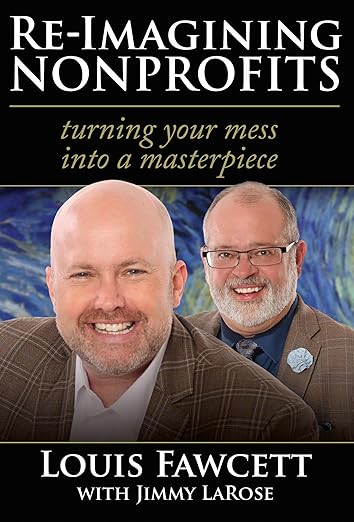
This is where AI should make you very, very happy. AI-powered platforms can draft donor acknowledgment letters, segment your donor database, analyze giving patterns, and identify your next major gift prospects — all before you finish your morning coffee. AI can scan thousands of foundation databases overnight to surface grant opportunities. It can tell you which lapsed donors are most likely to re-engage and save you the embarrassment of calling someone who left your organization in a huff three years ago. It can automate the routine so that you can focus on the irreplaceable: building relationships and asking for money.
Think of AI as your chance to finally get rid of your desk. If you are spending forty hours a week on administrative tasks that a machine can do better and faster, you have been running a very expensive, very sophisticated hobby — not a true impact organization. Every hour saved on back-office work is an hour you can spend doing what actually changes and saves lives: being face-to-face with donors.
There Is No Substitute for Face-to-Face Asking. None.
I need to say something that the nonprofit establishment does not want you to hear: email is not fundraising. Social media is not fundraising. A beautifully designed e-newsletter with a “Donate Now” button is not fundraising. These are all just very creative ways to avoid sitting across the table from a human being and asking them to invest in your mission. The only way to raise millions of dollars consistently, year over year, is through face-to-face asking. This is the way it has always been and it is the way it will always be – even if AI makes us feel like we’re in the Matrix (blue pill, anyone?).
Major Gifts Ramp-Up, the premier fundraising and management program for nonprofit professionals, is built entirely on this principle. The structured cultivation process — the discovery call, the first visit, the written proposal, asking permission to ask, reviewing the gift range chart, making the specific dollar ask, and following up relentlessly — is a sequence that depends entirely on human presence, human attentiveness, and human courage. You cannot automate the moment when you look a donor in the eye and say, “Would you consider a gift of $300,000 over three years to fund our afterschool program?” You just can’t. And if you think you can, please stop reading this article go find another line of work.
The number one reason philanthropists don’t give generously to your nonprofit is because they haven’t been asked. In person. Face to face. At least the beggar on the street has the courage to look you in the eye. If they can do with a cardboard sign, then nonprofit professionals have no excuse.
People Give to People: The NANOE Principle That Never Goes Out of Style
The National Association of Nonprofit Organizations & Executives (NANOE) has built its entire reformation of the charitable sector on a foundation of common sense: philanthropists give to masterpieces, not messes. And they give to people they trust, not to algorithms they’ve never met. No AI tool, however sophisticated, can replicate the moment when a donor says, “I trust you, and I believe in what you are doing.” That moment is built over months — sometimes years — of genuine relationship, genuine listening, and genuine care for the donor’s values and legacy aspirations.
NANOE teaches that development is a reciprocal relationship where serving the needs of donors maximizes generosity. Our role as nonprofit leaders is to be the liaisons between the needs of the community and the needs of donors to give. You meet the needs of philanthropists to give rather than your organization’s need to receive. An AI agent can surface a donor’s giving history, but it cannot ask them open-ended questions. It cannot listen genuinely. It cannot lean forward across the table when the conversation turns personal and say, “Tell me more about that.” That’s your job. Stop outsourcing it to a newsletter or a social media post.
Every Category of Donor Requires a Human Being. Every Single One.
Here is where I lose the pious, tech-utopian crowd, and I am perfectly fine with that. Every major funding source — without exception — makes decisions through human relationship and face-to-face interaction. Let me walk through each category, so we are clear.
Individual donors, regardless of how analytically minded they may be, ultimately give based on emotional connection and personal trust. Wealthy people are not ATM machines — even though most nonprofits treat them exactly like ATM machines. They have hopes, dreams, fears, and worries just like everyone else. Your job is to deserve that gift through relationship, not to assume they’ll write a check because your email subject line was clever.
Corporate giving officers justify major gifts by bringing back a story — a site visit, a compelling conversation, a relationship they respect. No corporate committee ever approved a transformational gift because of a well-formatted grant proposal. They approved it because someone made the case in person.
Foundation program officers, despite their intimidating application portals, make funding recommendations based on personal knowledge of your leadership. You will not communicate who you are through a PDF.
Churches and faith-based funders make giving decisions through trust, shared values, and personal connection. Walk in the door. Sit down. Tell the story. Break bread. That is a fundraising strategy.
And government officials champion your funding because they have walked your floors and met the families you serve — not because they admired your newsletter design.
The Winning Strategy: Automate the Routine, Protect the Relationship
The nonprofits that will thrive — the ones that monetize every hour and turn their messes into a masterpieces — are the ones that deploy AI strategically and ruthlessly to eliminate time-wasting administrative work, and then protect the human core of their major gift programs like their mission depends on it. Because it does.
Use AI to build your briefing book before a donor meeting. Use it to stack-rank your top 100 donors and assign target ask amounts. Use it to draft the thank-you note after the visit. Use it to identify the millionaire prospects within a twenty-mile radius of your headquarters who have an affinity for your work.
Major Gifts Ramp-Up teaches you to formulate an eighteen-month advancement calendar and create a comprehensive campaign goal — AI can help you populate and track every piece of that infrastructure.
But the conversation itself — the one that turns a $5000 annual donor into a $500,000 legacy gift? That belongs to you. To a skilled, mission-driven, emotionally present human being who has earned the right to sit across that table and say, “May I have your permission to ask you to invest in this campaign?”
The Bottom Line
Laziness has never saved a life. Neither has a chatbot. AI is a powerful, extraordinary tool that can free you from the administrative purgatory that is killing your nonprofit’s growth — and you should embrace it without apology. But the mission of your organization will be funded by human beings, and they will write those checks because another human being looked them in the eye, listened genuinely, and made a bold, specific ask. Get out of your office. Get off your email. Get in front of your donors. That is still — and always will be — how fundraising works.
AI Can Write the Letter, But It Can’t Make the Ask with Louis Fawcett was first posted at INSIDE CHARITY
For more articles like AI Can Write the Letter, But It Can’t Make the Ask VISIT HERE

2 Comments
Wonderful article!, Louis. It addresses the current interest in AI, places it in it’s appropriate category of tools and accurately identifies why it is not the answer to fundraising.
Well done.
Interesting perspective on the limits of automation. Technology can support efficiency and personalization, but human connection still plays a major role in building trust and inspiring meaningful action (ScienceDirect). What part of human interaction is hardest to replicate when making a genuine ask?